
group theory, explained for beginners
what is a group, anyway?

When I was a baby undergrad, I was endlessly fascinated by the word group theory.
It sounded so innocent, but whenever I opened a book about it, I was confronted with some very scary looking math.
But group theory is not all that scary! So in this post, I’d like to explain what a group is (with some pictures). This is the explanation I wish I’d heard when I was first learning it.
group theory is the study of symmetry
Let’s look at this picture.
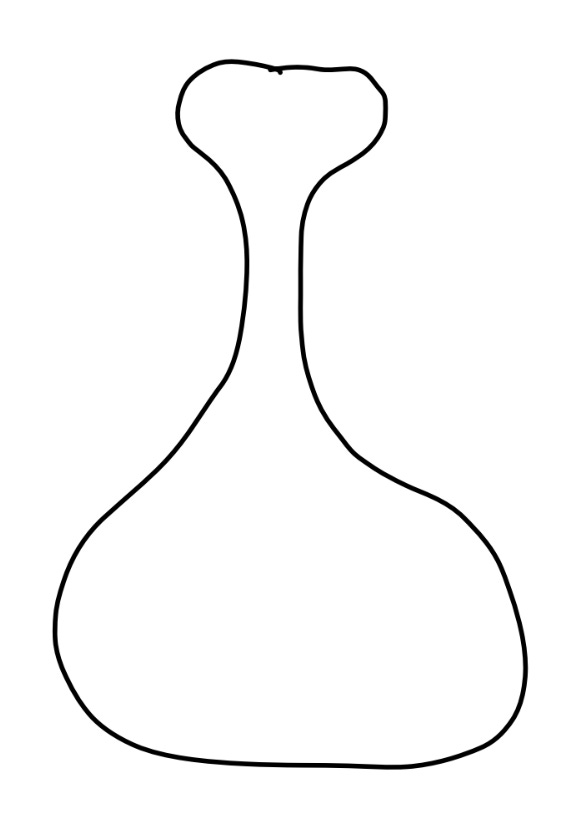
It looks “symmetrical”. But what does that mean?
Precisely, if you reflect it across the middle line, it looks the same.
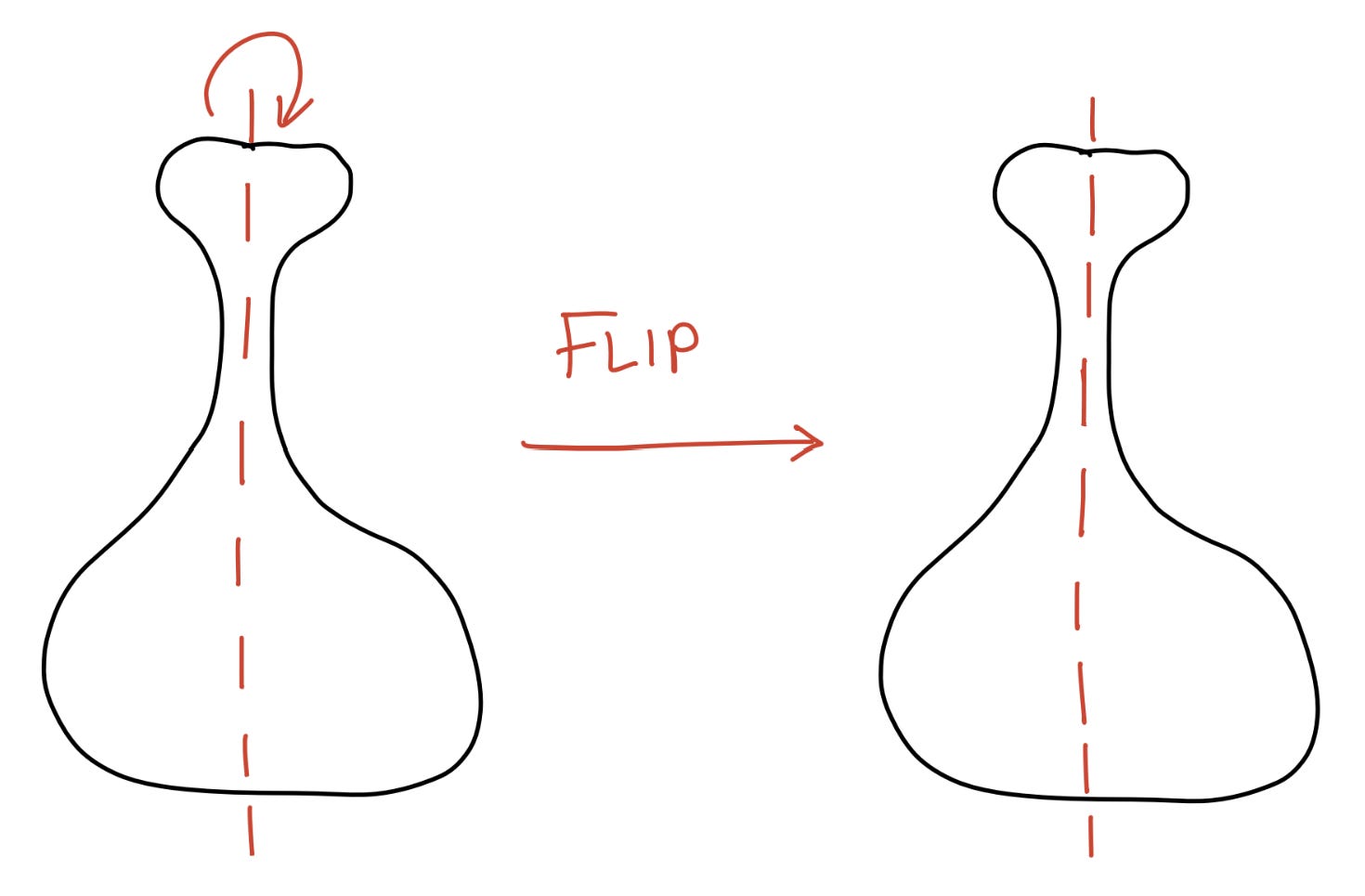
In other words, an object is “symmetrical”, if there is an action you can perform on it that leaves it looking the same.
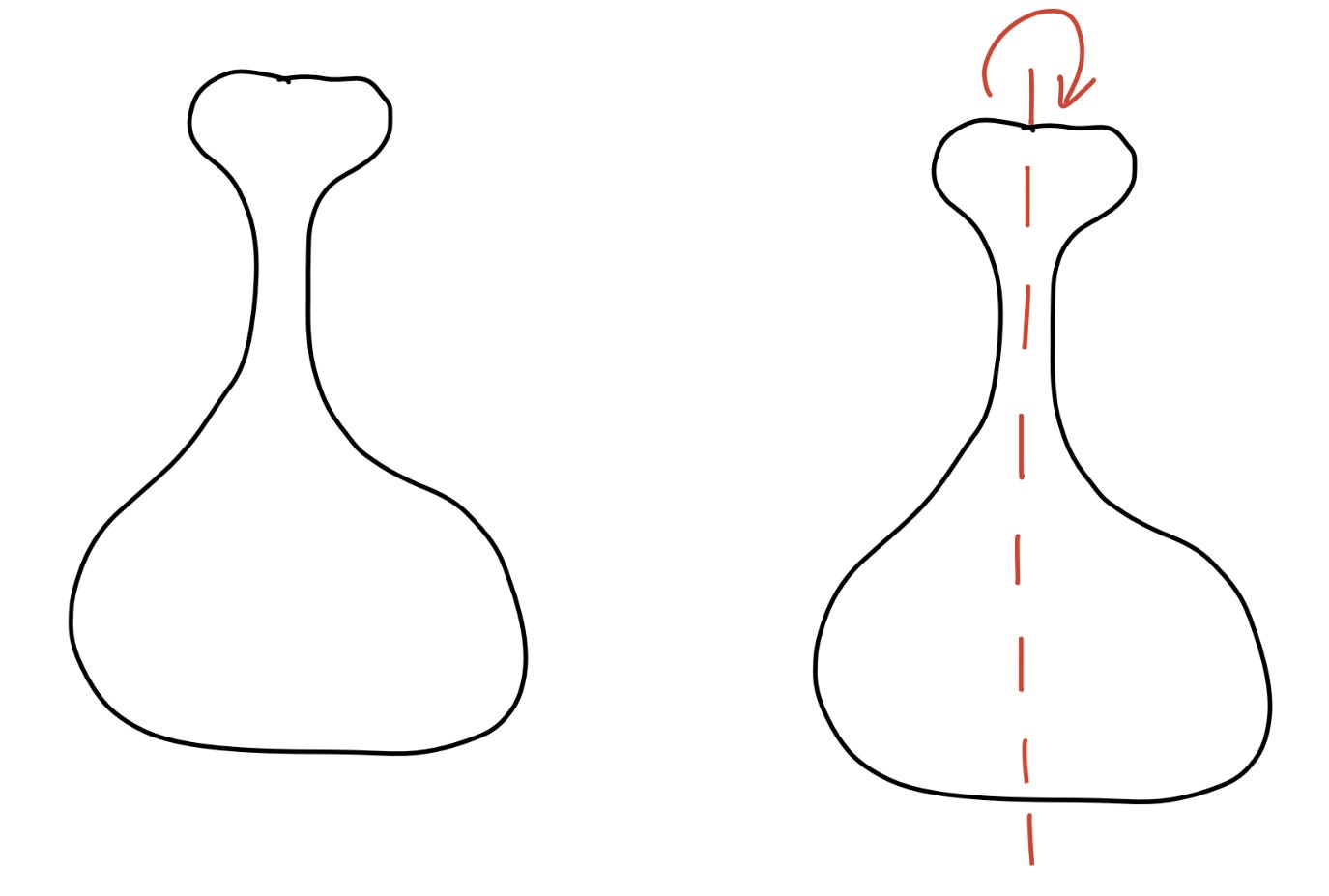
In this case, there are two actions you can perform: do nothing (that’s always one that we count) and flip across y-axis.
even more symmetry!
Now look at this equilateral triangle. It also symmetrical, but in more ways.
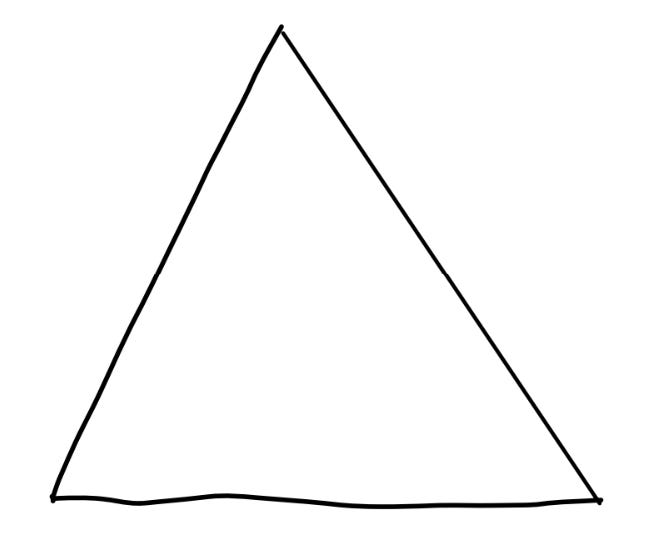
You can reflect it across the y-axis. But you can also rotate it 60 degrees.
In fact, there are 6 different actions you can perform that leave it looking the same.
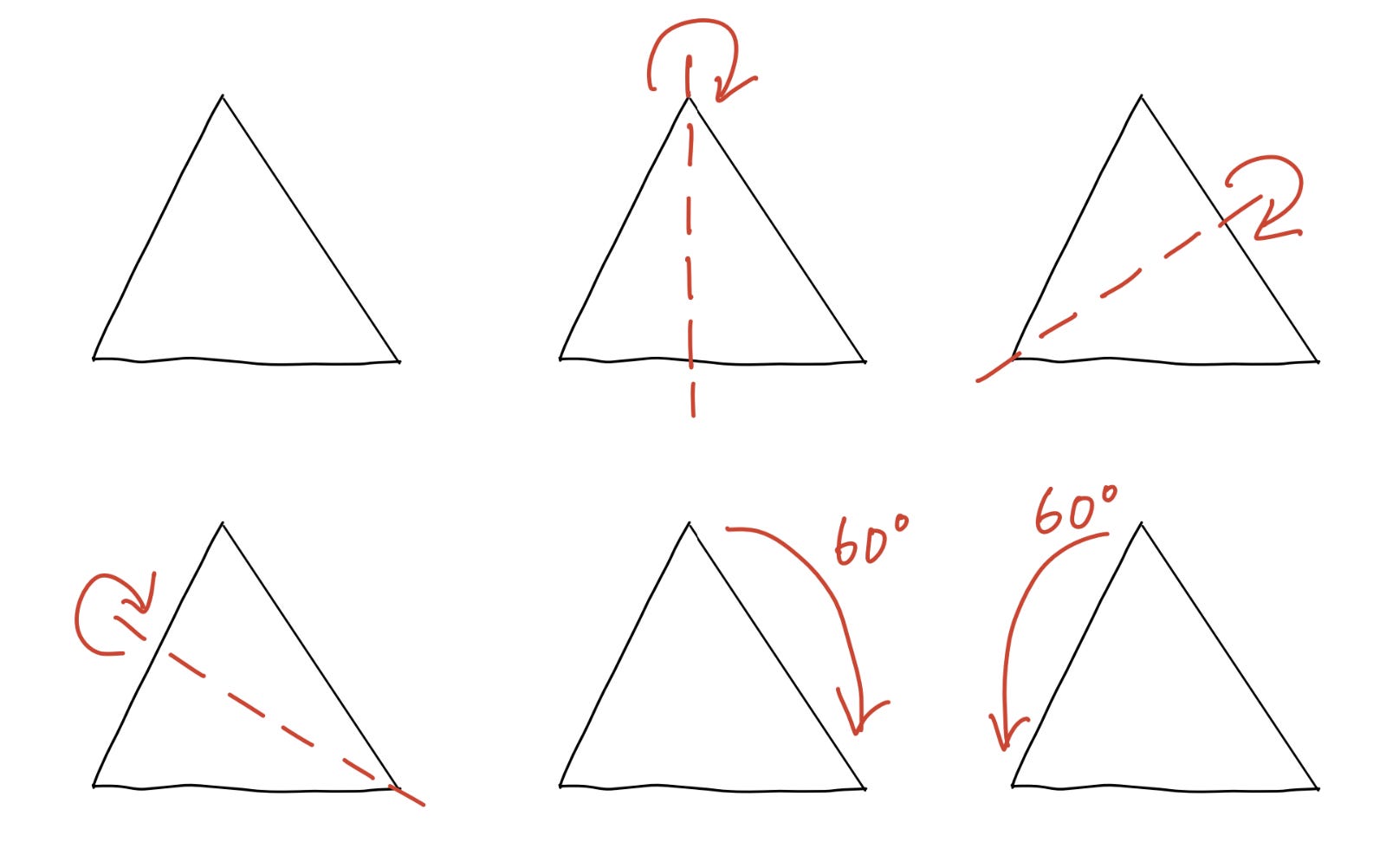
we can combine actions to get other actions.
If you stare at the actions above, you’ll quickly notice something.
Given two actions, you can compose them to get a third action.
How? Just perform one and then another, read from right to left.
for example …
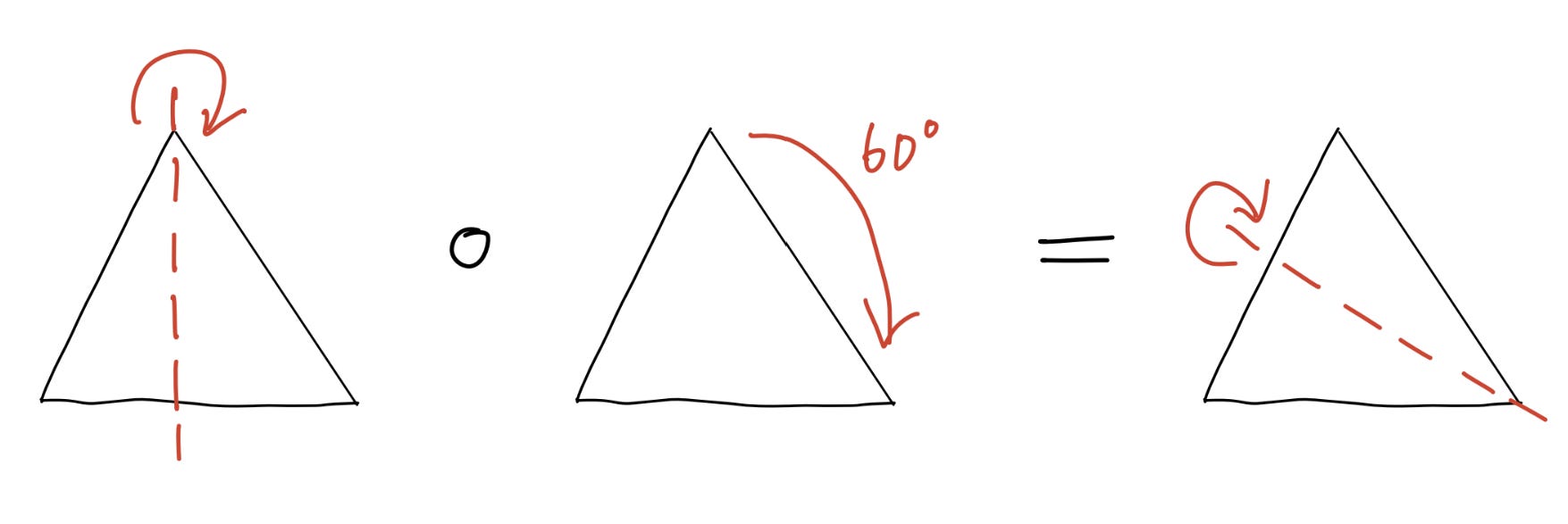
If you rotate clockwise by 60-degrees and THEN the reflect left-right, this is the SAME as reflecting across the axis on the right.
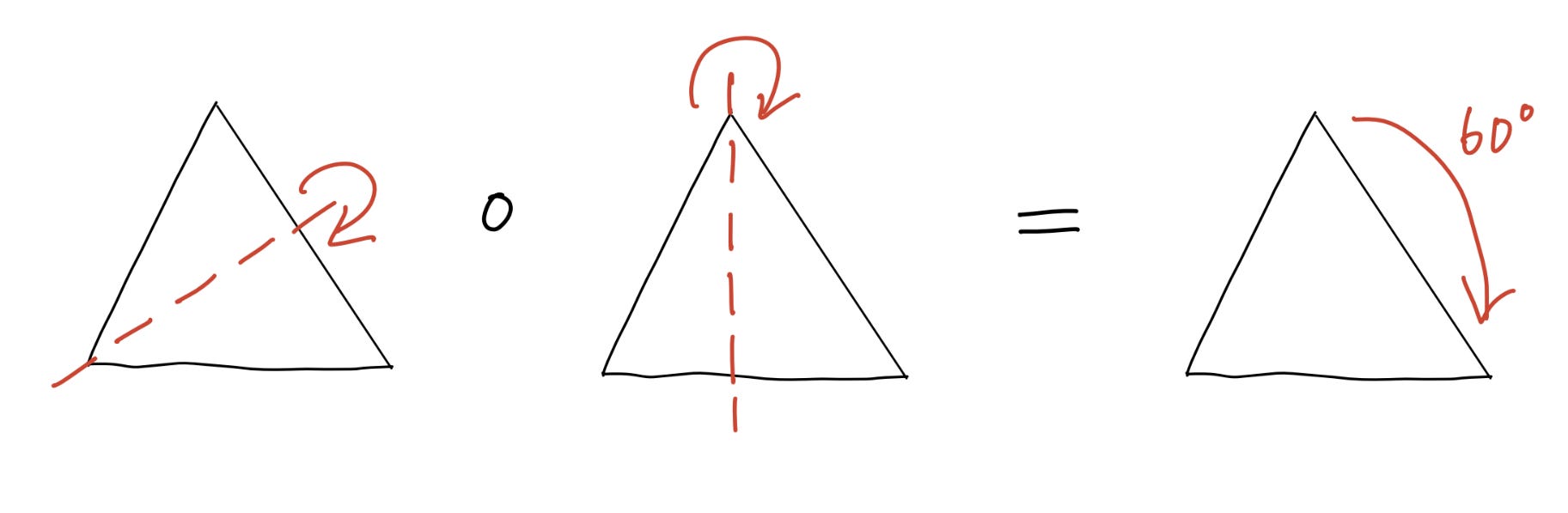
Another example: if you reflect left-right and THEN flip along the axis on the left, it’s the SAME as rotating clockwise by 60-degrees.
We should think of this as “multiplying” two actions to get a third.
what are the properties of this “multiplication”?
There are a few properties that this “multiplication” satisfies:
It is associative. In cartoon notation, we have
There is an identity element, namely the “do nothing” action.
Each action has an inverse action. That is, for each action, call it “action 1” there is another action, call it action 2, where
ok so what’s a group?
Mathematicians released that many objects in math satisfy these same properties. So we could make one general definition that encapsulates all of these objects, and study them all at the same time.
A group is a set G with an operation, here denoted “.”, satisfying:
(Associativity). We have
(Identity element). There is an element e in G, called the identity element, which satisfies
(Inverse element) Every element in the group has an inverse. That is, for each element g in G, there is an “inverse element” h in G such that
These axioms, on the face of it have nothing to do with symmetries!
But let’s not forget how we discovered them: by first looking at actions, studying their properties, and then axiomatizing those properties.
This definition is the foundation of what we call group theory, which is a beautiful wonderland.
problem of the week
Here is the challenge problem for this week:
Eight points are chosen inside a circle of radius 1. Prove that there are two points with distance less than 1.
Got a solution to the challenge problem? Submit it here.
Thanks for reading and happy learning! See you next week,
Adithya
I always get confused with closure. Why isn't it an axiom? Can it be easily derived from the others?
You can’t just tease us with the diagram from Dummit and foote and leave us hanging!